
Find Who Owns Sherman Property
No single lookup settles the question. Figuring out who owns a Sherman County property runs from the site address to the newest recorded deed. Each office plays its own part. The County Appraiser ties the situs address to a parcel card and a tax-roll owner. The Register of Deeds records the instrument that transferred or burdened title. The Clerk maintains real-estate ownership records and tax abstracts. Keeping each source in its proper role matters. It keeps you from mistaking a mailing contact, occupant, permit applicant, or stale tax name for the legal owner of record.
- Normalize the address with USPS and decide whether it is in Goodland, Kanorado, or rural Sherman County.
- Use the Appraiser's Parcel Search route if available. Capture the owner, mailing address, parcel number, legal description, and record date.
- Ask the Register of Deeds for the newest deed under that owner and legal description. Read the grantee and vesting language.
- For an entity, search its exact name in the Kansas Business Entity Search. Treat agent information as an entity contact, not as personal ownership.
Search in both directions when you can. An address search finds the parcel; an owner-name search can surface other Sherman County parcels or a variant entity name. The county publishes no live assessor form, recorder index, or GIS endpoint online, so contacting the office directly is the sound fallback. Skip unverified commercial portals.
Sherman Property Address Identities
Three different identifiers answer three different questions. The situs address is where the Appraiser places the parcel. The mailing address is where a tax bill or notice goes. It may sit in another city or state entirely. The legal description is the deed and plat language that identifies the land itself. So can the mailing line alone tell you who owns this property? It cannot.
- Owner of record
- The person or entity named in the controlling county record at the time it was updated.
- Vesting
- The deed wording that states how title is held, such as by individuals, a trust, or an entity.
- Grantee
- The person or entity receiving an interest in a recorded deed.
- Situs address
- The physical location used by the assessor, which may differ from the owner's mailing address.
A post-office city proves nothing about boundaries. For rural Sherman County land, the mailing city may not match any incorporated place. It may not match any incorporated place at all. Goodland and Kanorado are the county's only two incorporated cities. USPS can standardize delivery geography. City boundaries and recorded land descriptions must come from official maps, ordinances, and county instruments.
Sherman Property Owner Sources
Each official source offers a different kind of owner evidence. Read the date and purpose of a record before deciding who owns a Sherman County property.
| Source | Owner Info It Gives | Access |
|---|---|---|
| Appraiser parcel card | Tax-roll owner, mailing address, parcel and value | Parcel Search link or Appraiser request |
| Recorded deed | Grantee, vesting, legal description, recording reference | Register office or targeted copy request |
| County Clerk | Tax abstracts and real-estate ownership records | Office request or KORA |
| Business Entity Search | Entity status and registered-agent details | Free state search |
| City permit file | Owner name supplied for a project at that time | Goodland or Kanorado record request |
An owner of record need not occupy the site. A tenant, family member, farm operator, manager, or contractor may be present without holding title. A permit applicant may repeat an owner name that was accurate only when work began. A GIS label, if the county confirms one, may simply copy the tax roll. The latest recorded deed is the stronger title lead. A complete title review may also require later liens, court orders, probate documents, and releases.
Recent Sherman Owner Records Can Lag
Kansas sets its assessment date on January 1. Sherman County publishes no fixed schedule for refreshing the owner field. A fresh sale can show up in the Register's record while the Appraiser card still lists the prior taxpayer. Note the dates you see. Compare the deed's execution and recording dates against the parcel card's effective or update date, if one appears.
Construction and parcel splits add their own lag. Goodland planning records may list a permit, replat, or amendment before any county tax display catches up. A 2024-25 city resolution outlined planned housing in Sunset Addition, and 2025 planning minutes took up a travel-store site plan. City records like those prove activity. They do not prove who owns the land now. The legal description is the link; use it to tie the city file to the county deed and parcel.
Note: A missing new name on the tax roll does not mean a recorded transfer never happened.
Payment status will not settle the timing question either. A tax account can be fully paid while its mailing name is stale, and a deed can be recorded before permit or appraisal files show the new party. Build a short chronology from the deed recording date, the parcel-card effective date, the tax year, and any city filing date. The newest date is not always the strongest evidence. What a record proves depends on its legal purpose.
Sherman Property Owners as Entities
Sometimes the answer is not a person at all. Who owns this property may resolve to an LLC, corporation, trust, or estate. It is not always an individual. Copy the grantee name exactly. Kansas Business Entity Search supports entity-name, business-ID, and resident-agent modes. Its result describes the entity record, not the land. A registered agent receives official papers. That agent is not necessarily a member, manager, shareholder, or landowner. The Kansas Business Entity Search interface shows the state search route. It matches an exact company name found in Sherman County owner records.
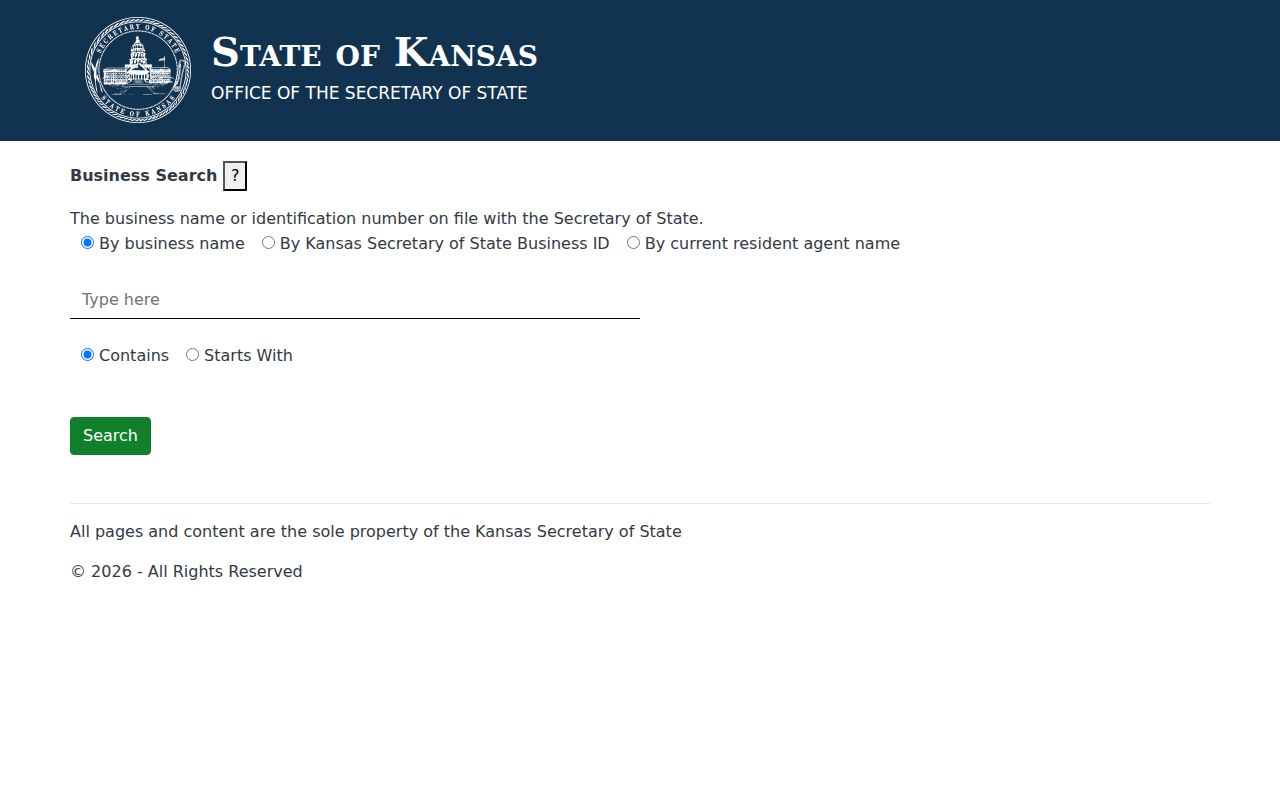
The entity line is only a cross-reference. The deed itself is what ties a corporation or LLC to the parcel.
Trusts show up through trustee vesting, and beneficiaries usually stay hidden from public filings. An estate adds a probate trail. Search the decedent's name in Kansas eCourt CaseSearch. Then request the petition, letters, sale order, final settlement, or journal entry from the Sherman County District Court. Match any executor or administrator deed back to the Register. Treat a case header as a lead only. The legal description may sit in a pleading or judgment that never appears online.
Request a Sherman Owner Record
Portals do not always answer. Call the office directly. The Register records deeds, mortgages, liens, plats, leases, and other instruments, and most of that material is open. Military discharges and sales validation questionnaires are the restricted exceptions. Ask by owner name variants, legal description, approximate recording date, and instrument type, and request a certified copy when the paper must be official.
The County Clerk is the county's open-records coordinator. Sherman County's written KORA process asks for a requester's name, mailing address, phone, and a detailed description. Published copy cost is $0.25 per page, with mailing, fax, or staff charges possible at actual cost. An estimate and advance payment may be required. A response is due by the third business day. It may grant more time and cost rather than completed records.
KORA reaches existing records. It never obliges the Appraiser, Clerk, or Register to build a narrative owner history. A narrow request for a parcel card, specified deed, plat, or tax abstract works far better.
In-person visits still pay off. Bring the address, legal description, owner spelling, and date. Ask staff how names are indexed when punctuation, initials, trusts, or business suffixes vary, then order only the pages you need. Keep the receipt with your record.
Limits of Sherman Owner Searches
No Sherman County owner search confirms who lives somewhere. It cannot verify occupancy today or an owner's intent to sell. Clear title is never guaranteed either. Mortgages, liens, easements, probate orders, quiet-title cases, and freshly recorded instruments can all change the legal picture. Buying or boundary decisions demand the actual instruments. Bring in a qualified title professional, attorney, or surveyor when the stakes are real.
Kansas has no general opt-out that erases a valid deed or tax record. Some categories stay restricted. The Safe at Home program gives eligible victims a substitute address for agency and public-record use. Never try to reverse a protected address through parcel, permit, voter, cemetery, or mailing clues. A record is never permission to keep contacting someone.
Lawful use. Sherman County owner records support deeds, boundaries, taxes, estates, and lawful due diligence. Kansas law does not permit using them to stalk, threaten, or harass anyone.